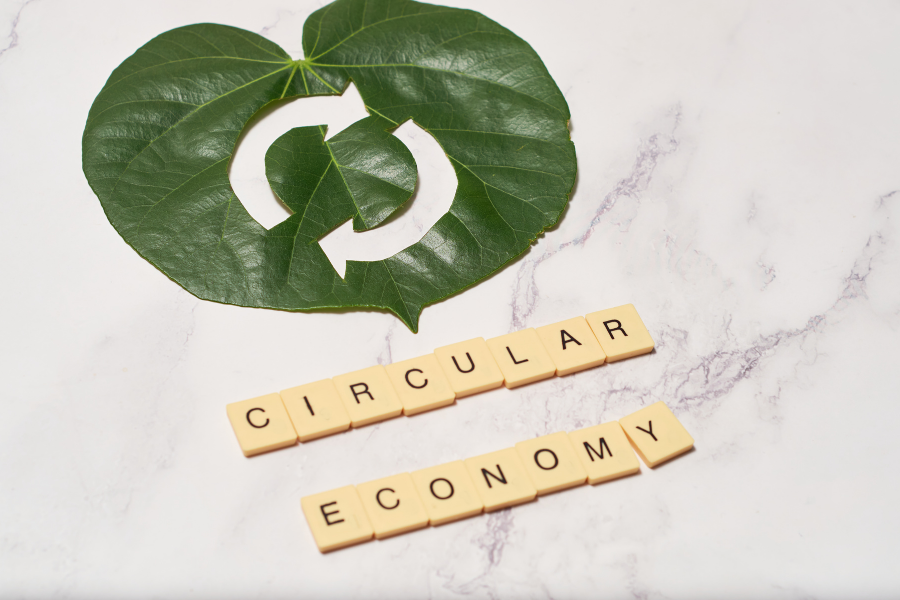
Most founders build their business model around one question: how do we make a profit? Few stop to ask what real impact their operations have. As part of the Interreg Atlantic Area BluePoint project, the Propelor team has been exploring why thinking circular adds value to start-up offerings, not just to the planet.
The old linear way of doing business was simple. Just take materials, make a product, sell it, and let it become someone else’s waste problem. But growing operational, environmental and consumer pressures mean that model is looking more risky than efficient.
Circular is the way forward
Circular business models offer a different starting point. Instead of designing a product for a single use, you design it to hold value for longer – through repair, reuse, resale or recycling. Irish examples already show what this looks like in practice: Anaula turns distillery wastewater into fertiliser and animal feed, and ReZero are extracting reusable plastic from cigarette butts.
Neither started out as an environmental mission. Both started by spotting a waste stream nobody else was using. The upside isn’t only environmental either. Thinking this way can lower material costs, open secondary revenue streams, and make a business less exposed to supply chain shocks.
There’s also a regulatory clock ticking. The EU’s Circular Economy Act, due in 2026, and the already active Corporate Sustainability Reporting Directive are turning circularity from a nice-to-have into a legal standard. Reporting obligations that currently sit with larger firms are steadily moving down the supply chain. Start-ups are increasingly being asked to provide evidence of their commitment to sustainability.
None of this means that start-ups needs to reinvent themselves around circularity. It simply means asking a few practical questions early. Where does waste happen in your model, and what would it take to capture that instead of losing it?
If answered honestly, that question tends to matter more to a start-up’s bottom line than any mission statement ever will.
Interested in learning more? Contact michelle@propleorbic.ie
The BluePoint Project: An Ambitious Step Towards a Circular Economy
The BluePoint Project aims to combat marine plastic pollution through sustainable and circular solutions. Funded by the Interreg Atlantic Area Programme, the project unites partners from various regions in Spain, Portugal, France, and Ireland. The primary goal is to create a replicable circular economy model to reduce the environmental impact of marine plastic waste while generating new business opportunities. The BluePoint Project engages communities, promotes technological innovation, and fosters a commitment to sustainability, making significant strides in protecting oceans.
Propelor BIC’s Role in BluePoint
Michelle and Órla highlight Propelor’s invaluable contribution to the BluePoint Project. Their journey began with research into technologies for detecting, collecting, sorting, and valorising marine plastic waste. Recognising the importance of collaboration, they are currently mapping out funding sources and support agencies and reaching out to citizens and policymakers to foster better cooperation to reduce marine plastic pollution. Propelor’s expertise in supporting start-ups is crucial for the growth of new ventures established through the project. Additionally, Propelor promotes the adoption of circular economy models, which are central to the BluePoint Project’s goals.